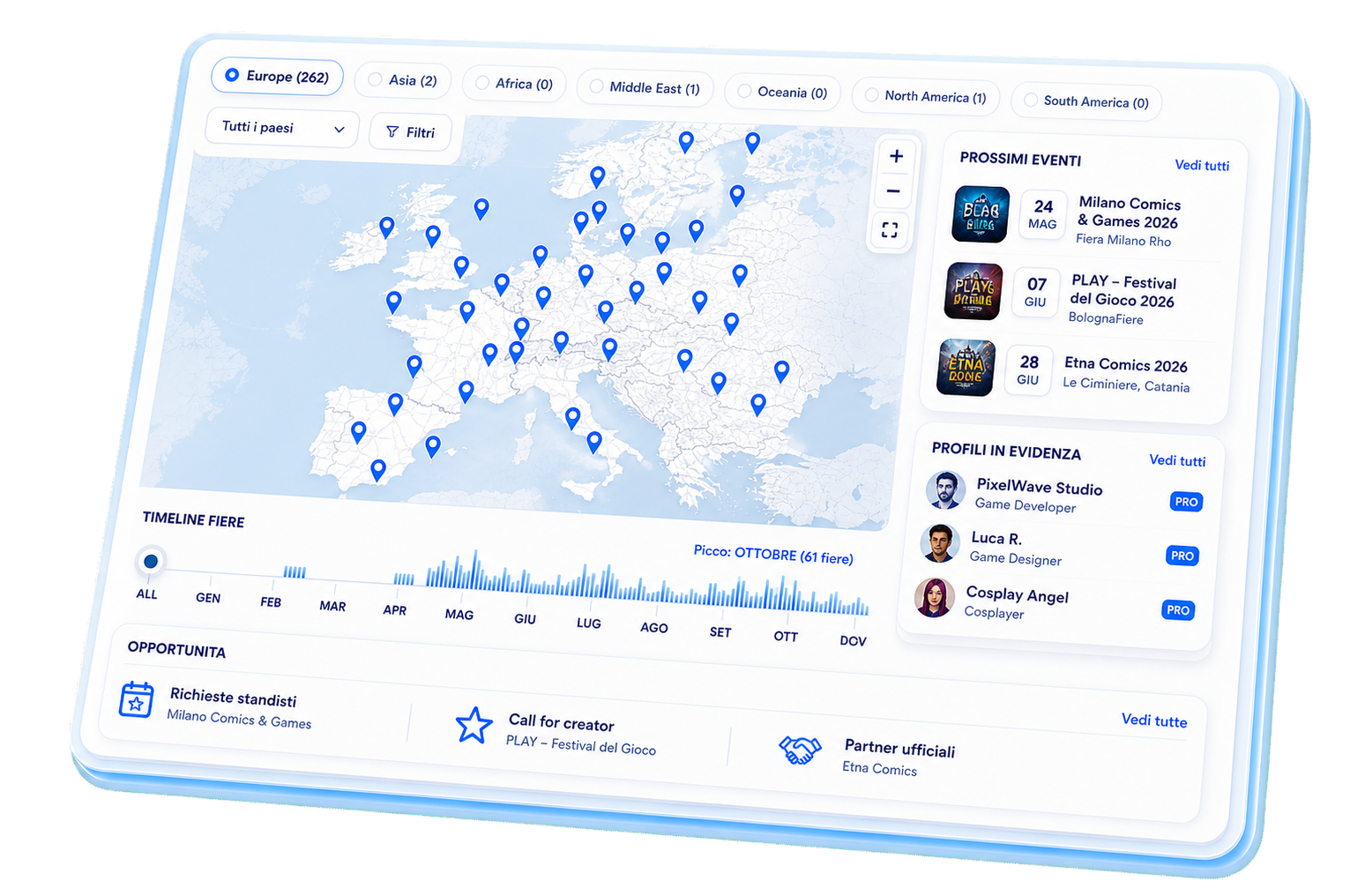
Compare global gaming and tech events side by side

gamingfairs.com helps you evaluate event relevance, audience fit, services and reliability - all in one neutral comparison tool.

Suggested comparisons
Select companies
Start from scratch or choose a suggested comparison.
Tip: you can compare up to 4 companies.

Comparison highlights

Overall scores

Total score (sum of all criteria)

Technical comparison

Each bar is scaled vs the best company for that criterion. Scores are based on standardized criteria and publicly available information.

How to compare gaming and tech trade fairs

A practical framework to evaluate gaming trade fairs, esports events and technology summits.

Gaming events glossary

What is a flagship event?

A flagship gaming event is a high-visibility fair or conference with strong publisher, developer, media, creator and community participation.

What does B2B access mean?

B2B access covers business days, meeting areas, press access, investor meetings, publisher appointments and other formats built for commercial networking.

What is audience fit?

Audience fit measures whether an event attracts the right mix of developers, publishers, esports teams, brands, creators, press, buyers and players for a specific objective.

What is post-event follow-up quality?

Post-event follow-up quality reflects how well contacts, leads, meetings, notes and outcomes are captured after the event and converted into useful next actions.

What makes a trade fair commercially relevant?

In the gaming and tech event sector, a fair is commercially relevant when it combines the right audience, timing, market coverage, meeting density and media visibility for a specific business goal.

The same event can be valuable for publishing, developer relations, esports partnerships, creator activations, hardware launches or regional market discovery depending on who attends and why.

Key criteria to evaluate event opportunities

When comparing gaming and tech events, teams should assess multiple dimensions beyond headline attendance. Core evaluation criteria include:

  • Audience fit - developers, publishers, investors, brands, creators, press or players.
  • Business access - meeting formats, B2B areas, matchmaking and private appointment options.
  • Market coverage - regional relevance, international reach and sector focus.
  • Timing - calendar position, launch windows, competing events and planning lead time.
  • Operational complexity - booth, travel, staffing, production and local logistics.
  • Expected return - leads, partnerships, press outcomes, community impact and pipeline value.

Why structured event data matters

Gaming and technology teams need structured event data because the calendar changes quickly and every region has a different mix of public expos, developer conferences, esports events and creator economy summits.

Total participation cost and long-term value

Total participation cost alone is not sufficient to evaluate an event opportunity. Long-term value depends on lead quality, follow-up discipline, partnership potential, brand exposure and repeatability.

A structured side-by-side view helps decision makers identify which events deserve attention, budget and team time.